Phenobarbital side effects in dogs: what’s normal and what to tell your vet
Sleepy, wobbly, thirsty and hungry is the usual start. Here is what settles, what stays, and the few signs that mean a call to your vet.

Most dogs get sleepy, wobbly, thirstier and hungrier when they start phenobarbital. Sleepiness and wobbliness usually ease within about two weeks, while thirst, hunger and extra weeing often carry on. Serious problems, mainly with the liver or blood cells, are uncommon, which is why your vet will want regular blood tests. Never stop or cut the dose suddenly: it can trigger severe withdrawal seizures.
- Sedation and unsteadiness are the usual first-weeks effects and most often settle within one to two weeks, according to the American Kennel Club and the vet journal Clinician’s Brief.
- Thirst, appetite and urination can stay raised long term, and dogs can put on weight if food isn’t watched.
- Liver damage and blood-cell problems are rare but serious, so vets check blood levels and liver tests: about 2–3 weeks after starting, again around 3 months, then every 6–12 months, according to the MSD Veterinary Manual (a standard vet reference). Your vet sets your dog’s own schedule.
- Yellow gums, eyes or skin, vomiting, poor appetite, a swollen belly or worsening wobbliness need a vet call the same day.
- Tell your vet about every other medicine and supplement, and never stop phenobarbital suddenly.
In this guide
- What side effects are normal when a dog starts phenobarbital?
- How long do the early side effects last?
- Why is my dog so hungry and thirsty on phenobarbital?
- Which side effects need a call to the vet?
- Why does my vet do blood tests on phenobarbital?
- What else should I tell my vet?
- What if the side effects are too much?
- Frequently asked questions
What side effects are normal when a dog starts phenobarbital?
The common ones are sleepiness, wobbliness, hunger and thirst. The MSD (Merck) Veterinary Manual lists sedation, ataxia (a wobbly, drunken walk), increased thirst and urination, and increased appetite as the common adverse effects of phenobarbital in dogs, and notes they can decrease within the first few weeks. Phenobarbital is one of the main anti-seizure medicines for dogs, and most of these effects are the price of a steady level in the blood.
| Effect | When | What to know |
|---|---|---|
| Sleepiness | Mostly the first 1–2 weeks | Often improves within 1–2 weeks. If it doesn’t, your vet may lower the dose or add another medicine (American Kennel Club). |
| Wobbliness (ataxia) | Mostly the first weeks | Common early on and usually eases. Marked or worsening wobbliness needs a call. |
| Restlessness | Some dogs, early on | Clinician’s Brief describes transient restlessness and hyperexcitability that settle in most dogs within 2 weeks. |
| Thirst and weeing more | Common, can continue | More drinking means more urine, which can cause toilet accidents (American Kennel Club). |
| Hunger and weight gain | Common, can continue | Dogs can gain weight if their food intake isn’t monitored (American Kennel Club). Ask your vet before changing portions. |
How long do the early side effects last?
Most sedation and unsteadiness fade in one to two weeks. Clinician’s Brief says the acute effects resolve in most dogs within two weeks of starting, and the AKC gives one to two weeks. That fits with phenobarbital taking about two weeks to reach a steady level in the blood. Thirst, appetite and urination are different: they often carry on, and Clinician’s Brief notes they are intolerable for some owners and occasionally lead to a change of medicine.
Why is my dog so hungry and thirsty on phenobarbital?
Increased thirst, urination and appetite are common effects of the medicine itself, and they can continue for as long as it is given. The AKC notes that dogs may gain weight if food intake isn’t monitored, and that extra drinking leads to more weeing and toilet accidents. Practical steps are worth agreeing with your vet rather than guessing: how much to feed, how to keep the dog at a healthy weight, and whether more frequent toilet trips are enough. Don’t cut back on water or food on your own.
Weigh your dog every few weeks and jot down how much they drink. A change from their new normal is more useful to your vet than the general fact that dogs on phenobarbital drink more.
Which side effects need a call to the vet?
Call your vet about yellow colouring, vomiting, poor appetite, a swollen belly, worsening sedation, fever, unexplained bruising or new skin sores. Phenobarbital can affect the liver, especially with long-term use and higher blood levels, and rarely the blood cells and skin. These are uncommon, and they are the reason for regular monitoring rather than a reason to avoid the medicine.
| Sign | Why it matters | What to do |
|---|---|---|
| Yellow gums, eyes or skin | A sign of liver trouble (jaundice). | Call your vet the same day. |
| Vomiting, diarrhoea, loss of appetite or a swollen belly | Listed by Clinician’s Brief among the signs of liver dysfunction. | Call your vet the same day. |
| Sedation or wobbliness that is marked, worsening or returns | The dose may be too high, or the liver may not be coping. | Call your vet. Don’t wait it out. |
| Fever, unusual tiredness or unexplained bruising or bleeding | Rare blood-cell problems, which MSD says can appear in the first 3–6 months. | Call your vet the same day. |
| New sores or crusting on the skin, especially the paws | Rarely a skin reaction (superficial necrolytic dermatitis), often alongside liver disease. | Book a vet visit soon. |
| More seizures, or seizures that look different | The blood level may be off, or something else has changed. Not necessarily a side effect. | Log them and tell your vet. |
A seizure lasting more than 5 minutes, or seizures one after another without your dog recovering in between, is an emergency. Call your vet or the nearest emergency clinic now and tell them you’re on your way. Our guide to what to do during a seizure covers the first aid.
Why does my vet do blood tests on phenobarbital?
Blood tests show whether the level is high enough to work and low enough to be safe. The MSD Veterinary Manual describes a steady state after about two weeks and recommends checking the level 2–3 weeks after starting, again around 3 months, then every 6–12 months, plus about 2–3 weeks after any dose change, alongside blood chemistry and a blood count. Clinician’s Brief suggests checking the level, chemistry and bile acids about every 6 months on long-term treatment. The sources differ a little, so follow your own vet’s schedule.
Liver enzymes: raised ALP is common on phenobarbital because the medicine makes the liver work harder (enzyme induction), so vets read the numbers alongside other tests such as bile acids and albumin rather than on their own.
The MSD manual links liver damage to long-term use, especially when blood levels are above 35 mcg/mL (150 µmol/L), and says that if serious liver or blood-cell problems develop the medicine is stopped. Your vet will decide what happens next, which is another reason to ring early rather than late. Because phenobarbital also speeds up how fast the body clears it over time, a dose that worked last year can need rechecking.
What else should I tell my vet?
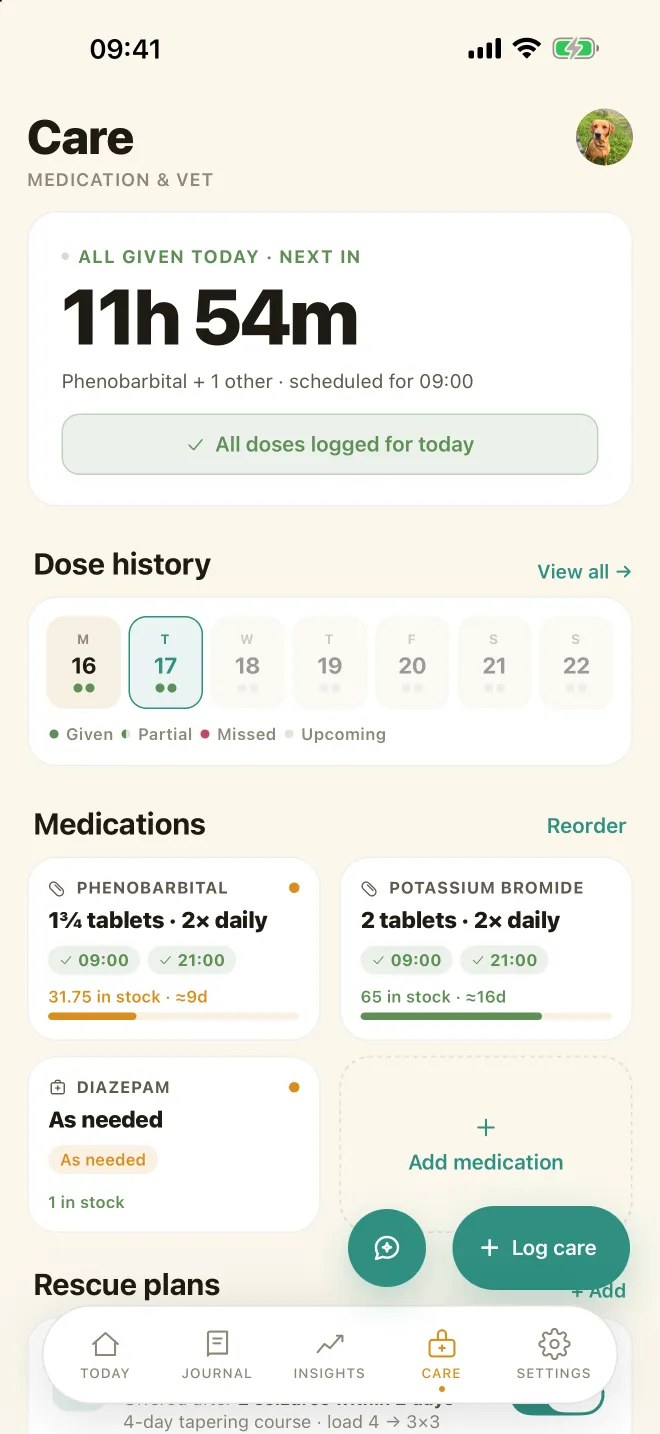
Tell them about every other medicine, supplement and flea or worming product your dog has. Phenobarbital speeds up the liver’s processing of other drugs, so it can lower the levels of some (the AKC and Clinician’s Brief list doxycycline, cyclosporine and zonisamide among them), and the AKC warns that some drugs raise the risk of liver toxicity. Ask your vet before giving any over-the-counter or human painkiller.
It can also affect other tests. The MSD manual says long-term use can lower thyroid hormone levels, rarely causing hypothyroidism, so remind any vet who runs thyroid tests that your dog takes phenobarbital.
What if the side effects are too much?
Phone your vet; don’t stop the medicine yourself. Stopping suddenly can cause severe withdrawal seizures, and both the MSD manual and the AKC say any reduction should be gradual and vet-led. Depending on the cause, your vet may check the blood level, adjust the dose, add another medicine (the AKC mentions potassium bromide) or switch. See our dog epilepsy medication guide for how the options compare.
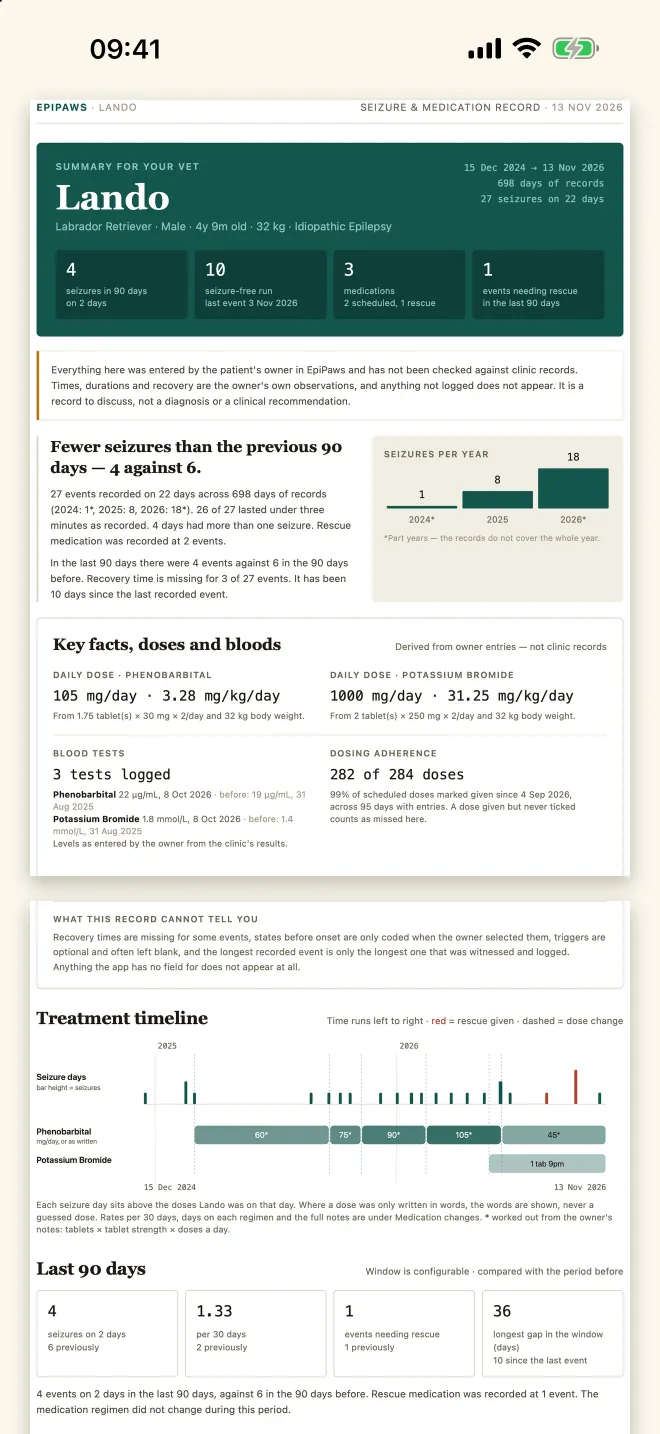
A written record makes that conversation far quicker. Note when your dog started, when each side effect appeared, how bad it was and what the seizures did in the same weeks. How to track your dog’s seizures for the vet shows what to write down, and many seizures happen at rest with no obvious trigger, so patterns in the log matter more than guesses.
Frequently asked questions
How long do phenobarbital side effects last in dogs?
Why is my dog so hungry and thirsty on phenobarbital?
Can phenobarbital damage a dog’s liver?
Is it normal for my dog to be wobbly on phenobarbital?
Can I stop phenobarbital if the side effects are bad?
Written by Jake Wise. I make EpiPaws and live with Lando, a Labrador with idiopathic epilepsy. I'm not a vet: this guide summarises published veterinary sources, which are linked inline and listed below. If you spot a mistake, email jake@rockethound.io.
Not veterinary advice. This is general information to help you talk to your vet. It can't diagnose your pet or tell you what dose to give. If a seizure lasts more than 5 minutes, or seizures come one after another without recovery in between, it's an emergency: call your vet or the nearest emergency clinic now.
Sources
- MSD Veterinary Manual. Anticonvulsants for Treatment of Animals (peer reviewed, updated April 2025). msdvetmanual.com
- Rossmeisl JH Jr. Phenobarbital. Clinician’s Brief (peer reviewed, 2015). cliniciansbrief.com
- Coile C. Phenobarbital for Dogs with Seizures: Uses, Side Effects, and Alternatives. American Kennel Club. akc.org
Keep reading
Dog epilepsy medication: phenobarbital, bromide and the rest
Phenobarbital, imepitoin, potassium bromide and levetiracetam explained, plus why blood tests matter and why you never stop suddenly.
How to track your dog’s seizures for the vet
The checklist for every seizure, why the dates matter so much, and how to hand your vet the whole story on one page.
Cluster seizures and status epilepticus in dogs
Two or more seizures in 24 hours, or one that won’t stop. How to tell them apart, when to call, and what a rescue plan is.