What to Do When Your Dog Has a Seizure (Step by Step)
Stay calm and note the time. Clear hard objects away from your dog, keep other pets and children back, and do not restrain them or put your hands near their mouth — dogs cannot swallow their tongue. Dim the lights, keep things quiet, and time the seizure. If it lasts more than 5 minutes, or a second one starts before your dog fully recovers, get to a vet immediately. Once it stops, stay with your dog through the groggy recovery and log what happened.
A seizure looks terrifying — but most run their course on their own
Watching your dog collapse, paddle, drool, and lose awareness is one of the most frightening things an owner can see. The hardest part is that there is almost nothing you can do to stop a seizure once it has started, and you shouldn't try to. Your job is not to end the seizure — it's to keep your dog safe, time it, and know the line where it becomes an emergency.
The good news: most seizures are brief, usually lasting under two minutes, and the majority of dogs come round on their own. What you do in those minutes — and the line you watch for — is what this guide walks through.
What to do during a seizure, step by step
If your dog is having a seizure right now, work through these in order. None of them require equipment — just a clock and a calm head.
1Stay calm and note the time
Glance at a clock or your phone the instant you realise what's happening. Duration is the single most important fact — it decides whether this is a routine event or an emergency, and it's the first thing your vet will ask.
2Make the space around them safe
Clear away anything hard, sharp, or breakable, and keep other pets and children back. Don't lift or move your dog unless they're somewhere genuinely dangerous — at the top of stairs, near water, or against a heat source — and even then move them gently by sliding, not carrying roughly.
3Don't restrain them, and keep away from the mouth
Don't hold your dog down and never put your hands — or anything else — near or inside their mouth. Dogs cannot swallow their tongue, and a seizing jaw can clamp down involuntarily. Reaching for the mouth is the most common way owners end up with a serious bite.
4Lower the lights and the noise
Dim the lights, turn off the TV, and speak softly if you speak at all. Reducing stimulation keeps things calm for your dog and for you.
5Time it, and film it if you can
Keep watching the clock. If someone else is around, ask them to take a short video. A clip showing what the body actually did is genuinely useful to your vet and can save a misdiagnosis later. See our guide on how to track dog seizures for the vet for exactly what to capture.
What not to do
A few well-meaning instincts can make things worse or get you hurt. During a seizure, avoid:
- Putting anything in the mouth. No hands, fingers, spoons, or objects. The tongue-swallowing myth causes more bite injuries than almost anything else.
- Restraining or hugging your dog tightly. Holding the limbs still won't shorten the seizure and risks injuring you both.
- Shouting or crowding. Loud voices and a circle of people add stimulation when you want less of it.
- Offering food or water mid-seizure or right after. Your dog can't swallow safely until they're fully alert, so wait until recovery is well underway.
When a seizure is an emergency: the 5-minute rule
Most seizures stop on their own within a couple of minutes. The emergency is when one doesn't — or when they stack up. A seizure that lasts longer than five minutes is called status epilepticus, and seizures that come one after another are called cluster seizures. Both can be life-threatening and need a vet straight away.
- A single seizure lasts more than 5 minutes (status epilepticus).
- Your dog has two or more seizures in 24 hours, or back-to-back seizures (cluster seizures).
- Your dog doesn't fully regain consciousness between seizures.
- Your dog struggles to breathe, overheats, or seriously injures themselves.
- It's their first-ever seizure — always worth a prompt call to the vet even if they recover.
If you're not sure whether you've crossed the line, call your vet or the nearest emergency clinic and let them help you decide. It's always better to ring and be reassured than to wait.
The recovery (post-ictal) phase: what to expect
When the convulsing stops, your dog isn't instantly back to normal. The minutes to hours afterward are the post-ictal phase, when the brain is essentially rebooting. Your dog may be disoriented, restless, clingy, wobbly, extra hungry or thirsty, or even temporarily blind. Some dogs seem briefly unlike themselves and can react fearfully, so give them space and move calmly.
Most dogs settle within about 30 minutes to a few hours. During recovery, stay nearby, keep them away from stairs and water, dim the lights, and wait until they're clearly alert before offering a little food or water. Quiet reassurance is the best thing you can offer.
Log it while it's fresh
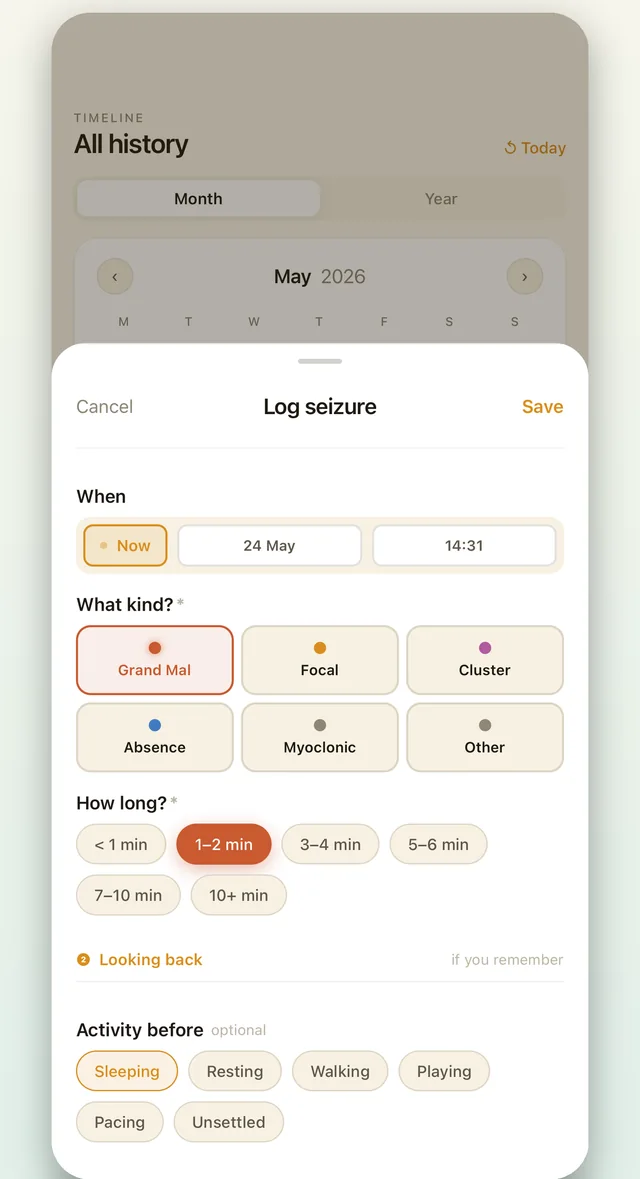
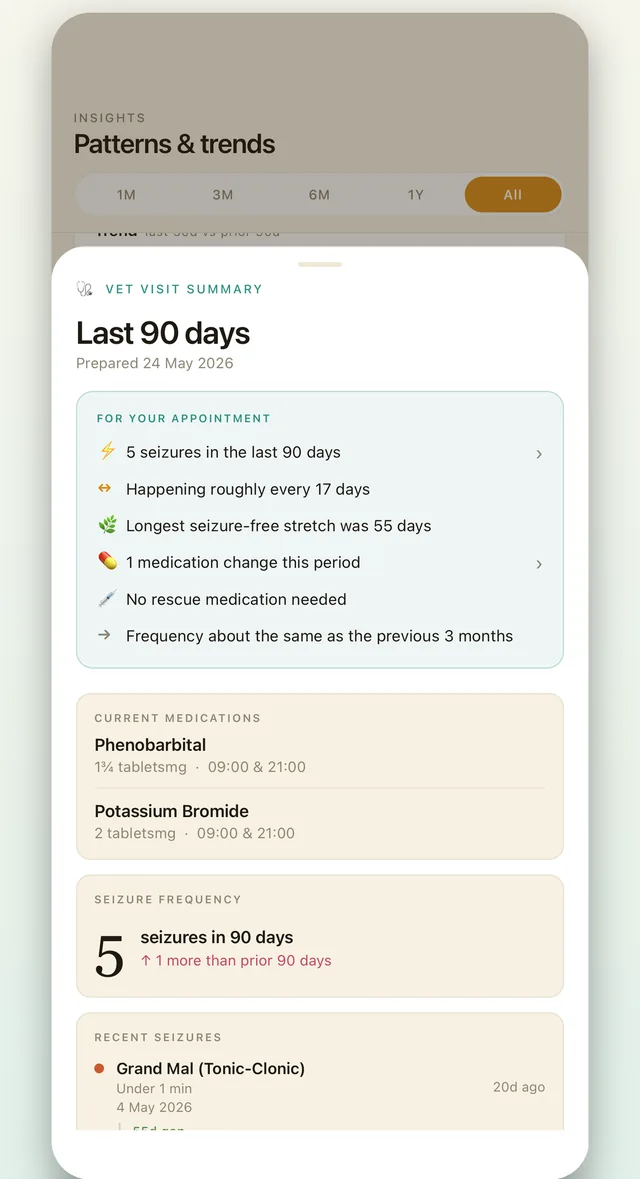
The moment your dog is calm and safe, write the seizure down — memory fades fast, and patterns over weeks and months are what actually guide treatment. Note the date, the start and end time, what the body did, any warning signs beforehand, how long recovery took, and any possible trigger or missed medication dose. Over time this builds the frequency-and-duration picture your vet relies on to adjust medication.
A dedicated app makes this far easier than a notebook in a stressful moment — EpiPaws lets you log a seizure in a few taps and turns months of events into a vet-ready summary. If you're trying to spot what sets your dog's seizures off, our guide to dog seizure triggers explains what to watch for.
Normal recovery vs. emergency signs
| Situation | Looks like | What to do |
|---|---|---|
| Ordinary seizure | Under ~2 minutes; stops on its own; groggy recovery | Keep safe, time it, log it, tell your vet at the next chance |
| Post-ictal phase | Disoriented, wobbly, hungry, briefly blind for up to a few hours | Stay nearby, keep calm and safe, wait before food or water |
| Status epilepticus | A single seizure lasting more than 5 minutes | Emergency — contact your vet immediately |
| Cluster seizures | Two or more seizures in 24 hours, or back-to-back | Emergency — contact your vet immediately |
| First-ever seizure | Any seizure in a dog with no prior history | Call your vet promptly even if your dog recovers fully |
Track your dog's seizures in seconds
EpiPaws is free on iPhone — log seizures fast, track medication, and share a vet-ready PDF at your next appointment. Works for cats too.
Download EpiPaws — freeFrequently asked questions
What should I do the moment my dog starts having a seizure?
Stay calm and note the time it started. Gently clear hard or sharp objects away from your dog and keep other pets and children back. Don't try to restrain them or hold them down, and keep your hands away from their mouth. Dim the lights, lower the noise, and speak softly. If you can, take a video for your vet.
Should I put my hand in my dog's mouth during a seizure?
No. Dogs cannot swallow their tongue, and putting your hand near their mouth during a seizure is the most common way owners get badly bitten, because the jaw can clamp involuntarily. Leave the mouth alone.
How long is too long for a dog's seizure?
A single seizure lasting more than 5 minutes is a medical emergency called status epilepticus and needs immediate veterinary care. So do two or more seizures in a row without your dog fully recovering in between (cluster seizures). Most ordinary seizures last under two minutes.
What should I do after the seizure stops?
Stay with your dog through the post-ictal phase, when they may be disoriented, restless, or temporarily blind for minutes to a few hours. Keep them away from stairs and water, offer calm reassurance, and wait until they're fully alert before offering food or water. Then log the date, start and end time, what the body did, and how recovery went.
When should I take my dog to the vet after a seizure?
Contact your vet immediately if a seizure lasts more than 5 minutes, if there are two or more in 24 hours, if your dog doesn't regain consciousness between seizures, or if they struggle to breathe or seriously injure themselves. For a first-ever seizure, or a short one in a dog with known epilepsy, contact your vet promptly for advice even if your dog recovers.